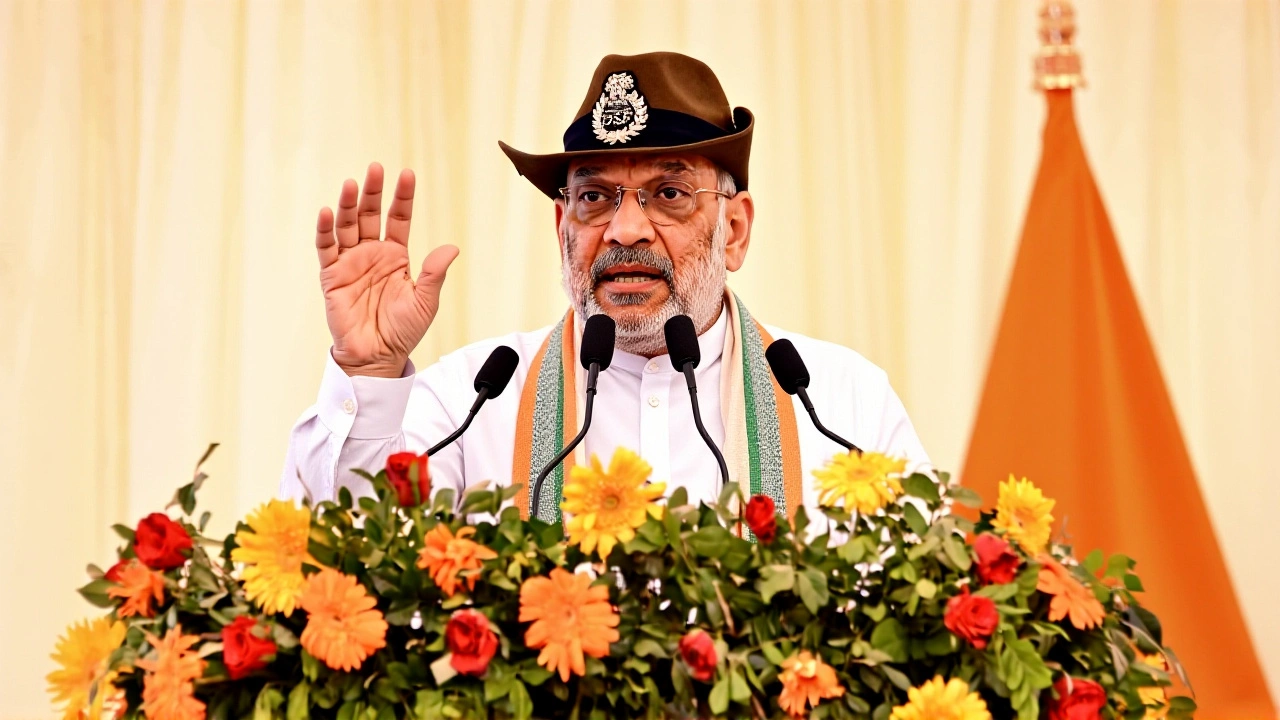
When Amit Shah, Union Home Minister of India, arrived at the historic border outpost on Tuesday, he didn't just bring greetings. He brought a stark reminder of history and a blueprint for future security. Standing at Sanju Post in Bikaner, Rajasthan, the message was clear: Pakistan once fled this ground, and today, technology will ensure it never happens again.
The visit wasn't merely ceremonial. It was a strategic signal from New Delhi about how India is upgrading its defense mechanisms along the volatile western frontier. Here's the thing—while politicians often talk about borders in abstract terms, Shah made it personal, tying current infrastructure upgrades directly to the bravery of soldiers in the 1965 war.
A History Written in Sand and Blood
Sanju Post isn't just another checkpoint. It’s a place where the outcome of the 1965 Indo-Pak war was sealed. During that conflict, intense fighting erupted here. The Indian Army’s fierce resistance forced Pakistani forces to retreat—a rare tactical withdrawal that allowed India to retain control of the area.
Shah invoked this memory deliberately. “Pakistan had to show its back and run,” he told the gathered troops and officials. It’s a bold statement, echoing the sentiment that Indian valor secured these lands. But wait, there’s more to this story than just nostalgia. The minister used this historical victory as a springboard to discuss modern threats.
The emotional weight of the moment was palpable. Soldiers stationed there know the terrain well—the shifting sands, the harsh sun, and the constant vigilance required. By linking their daily duty to the heroes of 1965, Shah reinforced morale while setting the stage for what comes next.
Tech Upgrades: The New Defense Model
Here’s the twist: the real news wasn’t just about the past; it was about the next six months. Shah announced that the government will begin installing anti-drone systems along the border within half a year. This marks a significant shift from traditional surveillance methods to tech-driven security.
Why drones? Because they’ve become a major vector for smuggling and espionage across porous borders. Traditional watchtowers can’t see everything. But radar and jamming technologies can. The move signals that India is moving away from relying solely on manpower to a hybrid model combining human intelligence with advanced electronics.
This isn’t an isolated project. It’s part of a broader strategy to create a “smart border.” Think of it like upgrading from a simple alarm system to a full AI-monitored security network. The goal? To detect intrusions before they happen, not after.

Infrastructure Overhaul: Roads to Resilience
Technology needs a backbone, and for the Rajasthan desert border, that backbone is concrete and asphalt. Shah highlighted massive infrastructure projects currently underway:
- Lateral Road: A 1,096-kilometer stretch running parallel to the border.
- Access (Axial) Road: A 520-kilometer network connecting outposts to main supply lines.
These numbers are staggering. For context, building roads in desert conditions is incredibly difficult. You’re fighting sandstorms, extreme heat, and logistical nightmares. Yet, the government is pushing ahead because mobility equals security.
For the Border Security Force (BSF), these roads mean faster response times. If a threat emerges at a remote post, reinforcements can arrive in minutes, not hours. It also improves living conditions for troops, reducing fatigue and boosting operational readiness.
What This Means for Regional Stability
The implications ripple beyond the immediate border. By fortifying the Rajasthan sector, India sends a message to Islamabad that any provocation will be met with overwhelming technological superiority. It’s deterrence through capability.
Analysts suggest this could reduce cross-border skirmishes by making infiltration nearly impossible. However, it also raises questions about escalation. Will Pakistan respond with similar tech upgrades? Or will tensions simmer beneath the surface?
The details of the anti-drone procurement process are still being finalized, but the direction is clear. India is investing billions in securing its borders, viewing them not just as lines on a map, but as active zones of national interest.

Looking Ahead: The Next Six Months
Over the coming quarter, expect to see tenders issued for drone detection systems. Local vendors and international partners alike will be vying for contracts. Meanwhile, construction crews will continue laying down those critical kilometers of road.
For the people of Bikaner, this means increased economic activity around the border towns. For the nation, it means peace of mind. As Shah demonstrated at Sanju Post, history honors the brave, but technology protects the future.
Frequently Asked Questions
Why is Sanju Post historically significant?
Sanju Post was a key battleground during the 1965 Indo-Pak war. Indian forces successfully defended the position against Pakistani advances, forcing a retreat that ensured the area remained under Indian control. It symbolizes military resilience and strategic importance.
What is the timeline for the anti-drone system installation?
Union Home Minister Amit Shah announced that the installation of anti-drone systems along the border will begin within the next six months. This rapid deployment aims to counter growing threats from unmanned aerial vehicles used for smuggling and surveillance.
How do the new lateral and axial roads help the BSF?
The 1,096 km lateral road and 520 km axial road improve logistics and mobility for the Border Security Force. They allow faster troop movement, quicker emergency responses, and better supply chain management in the challenging desert terrain of Rajasthan.
What was Amit Shah's main message regarding Pakistan?
Shah reminded attendees that Pakistani forces had retreated from Sanju Post in 1965 due to Indian bravery. His message combined historical pride with a forward-looking stance, emphasizing that modern technology would now prevent any future incursions or provocations.